
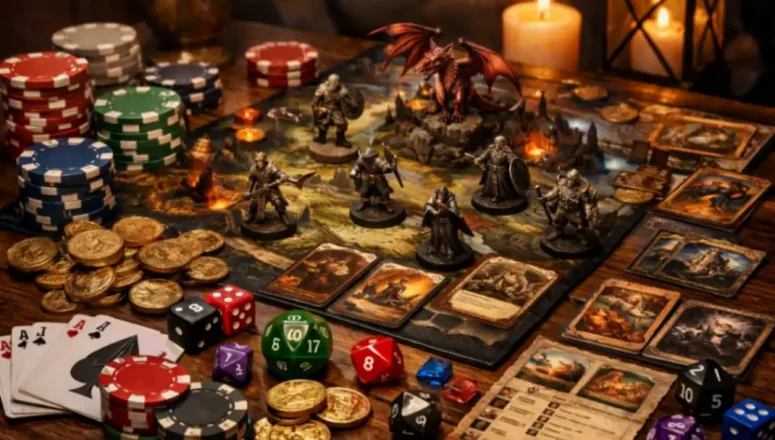
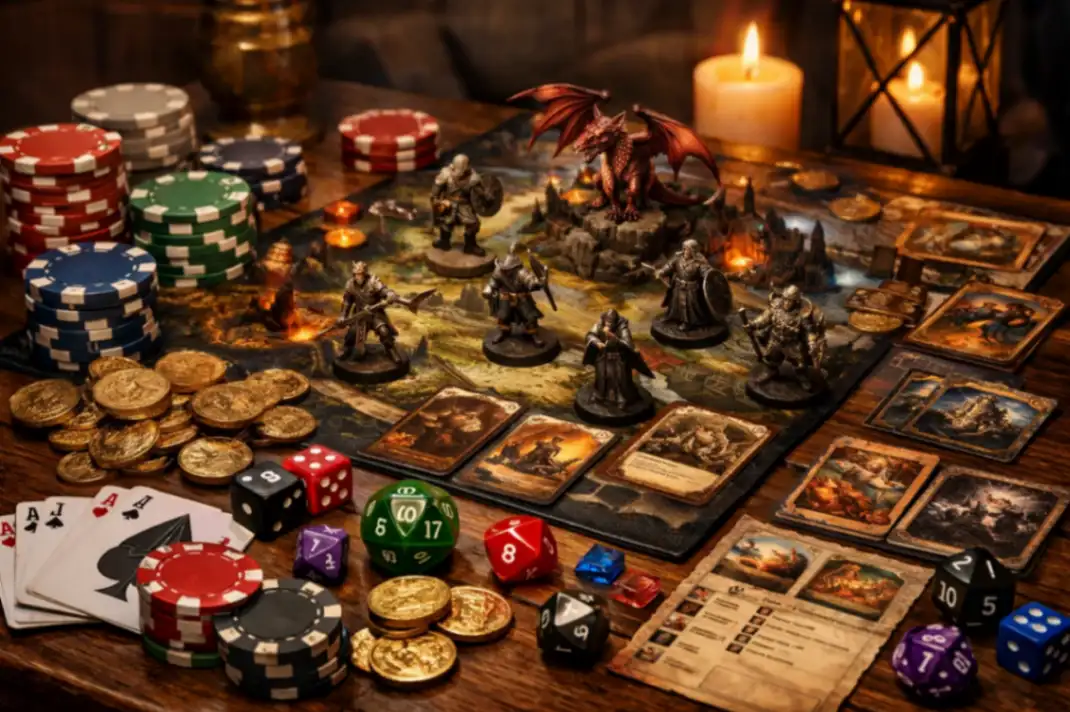
The modern tabletop industry is undergoing a fascinating transformation. Traditional casino-style mechanics are merging with character progression, storytelling, and world-building. As a result, tabletop gambling games with RPG elements are redefining how players experience risk, reward, and strategy. Instead of simply placing bets and relying on probability, participants now develop characters, unlock abilities, explore narrative arcs, and influence long-term outcomes.
This hybrid format combines the psychological tension of gambling with the immersion of role-playing games. The result is a dynamic genre where mechanics like dice rolling, deck-building, bluffing, and wagering coexist with quests, experience points, and evolving storylines. In this article, we explore how RPG-driven gamification is reshaping tabletop gambling entertainment, highlight key mechanics, review notable titles, and examine why this trend is gaining momentum in 2026.
The Evolution of Tabletop Gambling Mechanics
For decades, tabletop gambling games were built around straightforward probability systems. Dice, cards, roulette-style wheels, and betting pools defined the core experience. However, modern audiences expect more engagement, narrative context, and progression systems. This demand has pushed designers to experiment with hybrid formats.
The integration of RPG elements into gambling board games introduces persistent character development. Players no longer engage in isolated rounds; instead, they embark on campaigns where their decisions shape long-term trajectories. Winning a round might grant experience points, new skills, equipment upgrades, or access to special betting powers.
This transformation reflects broader gamification trends across the entertainment industry. Just as video games incorporate loot systems and narrative arcs to increase retention, tabletop gambling RPGs create emotional investment beyond a single wager. The stakes become layered: financial, strategic, and narrative.
Moreover, this evolution enhances replayability. Instead of repeating identical probability-driven rounds, players experiment with character builds, strategic risk profiles, and storytelling approaches. The genre shifts from transactional gaming to experiential gaming.
Core Mechanics of RPG-Driven Gambling Board Games
The fusion of gambling systems and role-playing mechanics relies on a careful balance between chance and character agency. Below is a breakdown of the most common structural elements found in successful hybrid designs.
Before examining the table, it is important to understand that these mechanics are not random additions. They are deliberately layered to maintain fairness while increasing player engagement and strategic depth.
| Core Mechanic | Gambling Function | RPG Integration | Strategic Impact |
|---|---|---|---|
| Dice Rolling | Determines win/loss probability | Skill modifiers adjust dice outcomes | Encourages character specialization |
| Card Betting | Wagering on hands or outcomes | Character abilities manipulate draws | Adds tactical depth |
| Risk Pools | Players stake resources | Experience points tied to risk level | Balances aggression vs. caution |
| Loot Systems | Random rewards | Equipment upgrades affect future bets | Creates long-term progression |
| Campaign Mode | Multiple gambling rounds | Story arcs connect sessions | Increases immersion |
As shown above, the key innovation lies in how randomness is influenced by character progression. Players feel empowered because their strategic decisions impact probability outcomes. However, designers must avoid overpowering abilities that break balance. The success of tabletop gambling RPGs depends on maintaining uncertainty while rewarding skillful planning.
This balance between chance and control is what distinguishes the new generation of tabletop hybrid games from both classic casino simulations and pure fantasy RPGs.
Popular Tabletop Gambling RPG Games to Know
The growth of this niche has produced several standout titles that demonstrate how effectively gambling mechanics can merge with narrative progression. These games illustrate the diversity of design approaches within the genre.
Below are notable examples that showcase different interpretations of the concept:
- “Roll & Realm: High Stakes Adventure.”
- “BetBound: The Guild of Fortune.”
- “Dice & Dominion: Casino Chronicles.”
- “The Wagering Wizard.”
- “Luckborn Legends.”
Each of these titles approaches the fusion differently. “Roll & Realm: High Stakes Adventure” focuses on dungeon-crawling campaigns where bets determine combat modifiers. “BetBound: The Guild of Fortune” builds its core loop around political intrigue and competitive wagering between guild factions. “Dice & Dominion: Casino Chronicles” recreates a fantasy casino city where players accumulate reputation and unlock special privileges.
“The Wagering Wizard” integrates spellcasting mechanics that manipulate probability, allowing players to bend odds through magical contracts. Meanwhile, “Luckborn Legends” emphasizes character backstories, linking risk tolerance to narrative consequences.
These examples highlight that the genre is not confined to one theme. Designers experiment with fantasy, steampunk, noir crime settings, and even sci-fi gambling empires. What unites them is a structured system where risk-taking evolves alongside character development.
Why Gamification Is Reshaping the Gambling Experience
Gamification has become a dominant design philosophy across digital and physical gaming environments. In tabletop gambling RPGs, gamification operates at multiple psychological levels.
First, progression systems create motivation loops. Experience points, skill trees, and unlockable abilities encourage long-term commitment. Players return not just to gamble but to develop their persona within the game world.
Second, narrative immersion reduces the transactional nature of betting. When wagering is embedded within a story, players perceive risk as part of an unfolding journey rather than a detached monetary event. This emotional framing changes engagement patterns significantly.
Third, social interaction deepens. Traditional gambling games often revolve around silent calculation. By contrast, RPG-driven formats promote negotiation, alliance-building, bluffing, and character dialogue. The tabletop becomes a stage for collaborative storytelling.
This shift also aligns with modern entertainment consumption habits. Audiences seek experiences rather than isolated mechanics. The combination of storytelling and probability satisfies both analytical and creative instincts.
From an industry perspective, gamification increases session length, replay value, and community formation. Players discuss strategies, share character builds, and create fan-generated content. The genre evolves organically through its community.
Strategic Depth and Player Psychology
One of the most intriguing aspects of tabletop gambling games with RPG elements is the way they interact with player psychology. Risk assessment is no longer purely mathematical; it becomes character-driven.
Players often adopt personas that influence their decision-making style. A cautious strategist may invest in defensive skills that mitigate losses, while a high-risk gambler builds abilities that amplify rewards during critical moments. This personalization enhances emotional investment.
Another psychological dimension is perceived control. In classic gambling, outcomes are entirely probabilistic. In RPG hybrids, skill modifiers and narrative decisions introduce controlled variability. Even when players lose, they feel that strategic choices influenced the result.
Designers must carefully calibrate reward systems. If progression makes winning too predictable, tension disappears. If randomness dominates entirely, character development feels irrelevant. The equilibrium between agency and uncertainty defines the genre’s sustainability.
Moreover, campaign-based formats encourage long-term thinking. Instead of focusing on immediate wins, players evaluate cumulative gains across sessions. This strategic horizon mirrors economic planning models, making gameplay intellectually stimulating.
The Future of Tabletop Gambling RPG Hybrids
As tabletop gaming continues to expand globally, hybrid genres are likely to gain further traction. Advances in design theory, print technology, and crowdfunding platforms enable indie creators to experiment with complex systems.
One foreseeable trend is modular campaign structures. Players may integrate gambling RPG modules into broader fantasy or cyberpunk campaigns. This interoperability will increase genre flexibility.
Another direction involves digital companions. While maintaining a physical board presence, apps could track character progression, manage probability calculations, and generate dynamic story events. This hybrid analog-digital model would enhance immersion without eliminating tactile gameplay.
Educational and psychological research may also influence design. Understanding decision-making biases, reward conditioning, and narrative immersion can refine mechanics for balanced engagement.
Ultimately, tabletop gambling games with RPG elements represent more than a niche experiment. They embody a broader shift toward experiential design. By blending chance, strategy, and storytelling, the genre offers a multidimensional form of entertainment that appeals to modern audiences seeking depth, immersion, and meaningful progression.
Conclusion
The emergence of tabletop gambling games with RPG elements marks a significant milestone in the evolution of board gaming. By integrating character development, narrative arcs, and strategic progression into traditional betting systems, designers have transformed a probability-driven format into a layered, immersive experience.
This new wave of gamification reshapes how players perceive risk, reward, and competition. It enhances replayability, strengthens social interaction, and encourages long-term engagement. As innovation continues, the boundary between gambling mechanics and role-playing storytelling will likely become even more fluid.
For enthusiasts seeking a deeper tabletop experience, this genre offers a compelling fusion of tension, strategy, and imagination.