
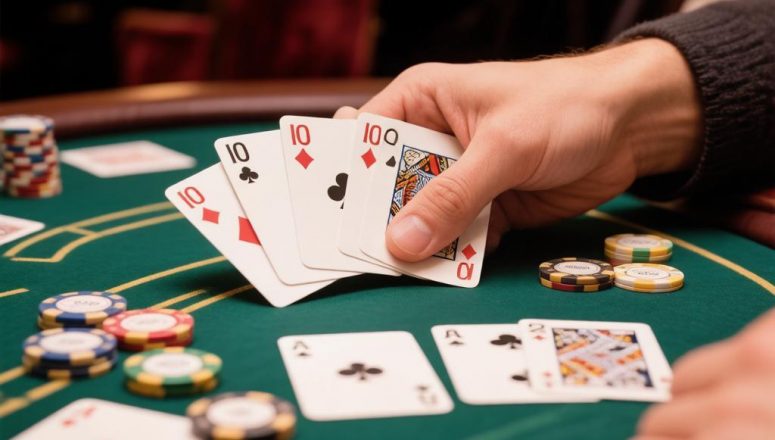
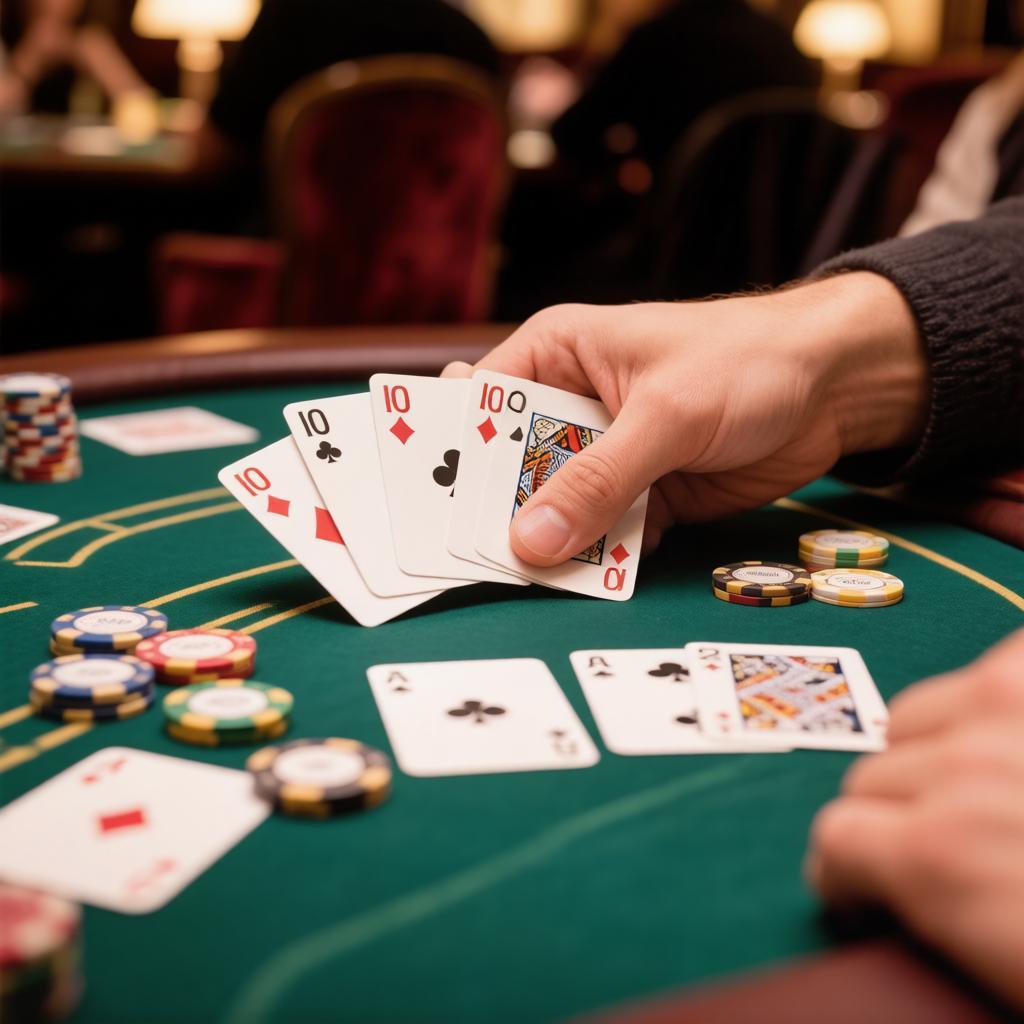
Every year, millions of people watch poker on television or hear friends talk about a great hand, and a large share of them never sit down to play for one reason: they assume the rules are complicated. They are not. Texas Hold’em fits its complete rule set into a few minutes of explanation, and the hand rankings, the part that looks intimidating, follow a logic simple enough to internalise in one evening. What takes longer is developing judgment, but that is exactly the right order of business: a player who knows the mechanics cold can start learning judgment immediately, while a player who fumbles the mechanics cannot think about strategy at all. The path from curious observer to confident first hand runs through three things: the structure of a hand, the ranking of hands, and a plan for how to actually play when your first cards hit the felt.
The setup: table, stakes and who does what
A Hold’em table seats two to ten players around a rotating dealer button, and the button’s movement is the heartbeat of the game. Because the game needs money in the pot before cards are dealt, two players to the left of the button post forced bets known as blinds: the small blind, half the minimum bet, and the big blind, the full minimum. Every hand, the button and blinds rotate one seat clockwise, which means every player takes turns in every position, and the order of betting changes accordingly.
Before the first card is dealt, it helps to know the vocabulary that gets thrown around the table:
- The pot: the pile of chips in the middle, which all contested bets join and which the winning hand takes.
- The dealer button: the marker that identifies the nominal dealer for the hand; its position determines who acts first and last.
- The blinds: the forced bets posted before cards are dealt, which create the pot and rotate with the button.
- Hole cards: your two private cards, dealt face down and seen by no one else.
- Community cards: the five cards dealt face up in the centre, shared by every player and combined with hole cards to make the best hand.
- The showdown: the moment remaining players reveal their hands to determine the winner.
This vocabulary covers everything a broadcast commentator assumes the audience knows, and knowing it in advance turns the first session from a translation exercise into a game.
How a hand unfolds from shuffle to showdown
Each hand follows the same fixed sequence, and it is worth walking through in full because the betting order within each round is where beginners lose their footing. The flow is this:
- Blinds are posted by the two players left of the button, and the dealer shuffles and deals two hole cards face down to each player, one at a time.
- The preflop round begins with the player directly left of the big blind, who can call the big blind’s amount, raise it, or fold; play proceeds clockwise, and the big blind acts last with the option to raise even if everyone has only called.
- The flop arrives: the dealer burns one card face down and deals three community cards face up. A betting round follows, now starting with the first active player left of the button.
- The turn is dealt: a fourth community card joins the board, and the same betting round structure repeats.
- The river completes the board: the fifth community card is dealt, and the final betting round takes place.
- The showdown settles it: if more than one player remains, each reveals their hole cards, and the best five-card hand built from the seven available cards wins the pot. Tied hands split the pot evenly.
- The button moves one seat clockwise, the blinds rotate, and the next hand begins.
Two consequences of this structure matter more than the rest. First, the player who acts last in each round, the one nearest the button, always decides with the most information, which is why position is called the most valuable raw material in poker. Second, the betting can end a hand at any street: when everyone else folds, the last aggressor wins the pot immediately without showing cards, which is how many hands resolve and how the game’s psychological dimension enters.
The hand rankings, in order of strength
Hand rankings are the grammar of the game, and they are worth learning precisely, because every decision you make references them. The ranking from strongest to weakest:
| Rank | Hand | How it is formed | Frequency intuition |
|---|---|---|---|
| 1 | Royal flush | Ace through ten of the same suit | The rarest hand; see it a handful of times in a lifetime |
| 2 | Straight flush | Five consecutive cards of the same suit | Extremely rare; usually ends hands immediately |
| 3 | Four of a kind | Four cards of one rank | Powerful enough to win almost every time it appears |
| 4 | Full house | Three of a kind plus a pair | Beats a flush; surprises most newcomers |
| 5 | Flush | Five cards of one suit, any ranks | Strong, but vulnerable to full houses |
| 6 | Straight | Five consecutive ranks, mixed suits | Solid, but the lowest straight loses ties |
| 7 | Three of a kind | Three cards of one rank | Strong in a set form; weaker as trips |
| 8 | Two pair | Two separate pairs | Common and deceptive; kickers decide many of these |
| 9 | One pair | Two cards of one rank | The workhorse hand; strength depends on the pair |
| 10 | High card | Nothing else applies | Wins only when nobody connects |
Three fine points resolve most ranking confusion. A full house outranks a flush despite seeming less dramatic, because seven-card combinations produce full houses less often. Suits are equal in Hold’em; no suit outranks another, and split pots are genuinely equal. And when two players hold the same ranked hand, the kicker, the highest leftover card in the five-card combination, decides the winner, which is why an ace with a strong second card is worth far more than the same ace with a weak one.
The betting options, one by one
When it is your turn, exactly one of a small set of actions applies, and knowing what each communicates is as important as knowing what each costs. The options:
- Check: pass the action to the next player without betting, available only when no bet is pending in the current round.
- Call: match the current bet amount to stay in the hand.
- Bet: place the first wager of a round, opening the action for everyone behind you.
- Raise: increase over an existing bet or raise, requiring others to call the new amount or fold.
- Fold: surrender your hand and any money you have put in the pot; folding costs nothing further and is often the cheapest decision available.
Betting size is not arbitrary either. The minimum raise is at least the size of the previous bet or raise, and in no-limit Hold’em, the format most common today, any player may bet any amount up to everything in front of them at any time. That single rule, unlimited wagers, is what separates no-limit from fixed-limit poker and what makes pot-sized raises such a potent weapon: a single big bet can end a hand that no amount of small betting would have settled.
Your first hand, walked through
Reading rules and playing them are different experiences, so it helps to pre-live a hand before sitting down. Here is how a typical opening hand looks from the inside:
- You post your blind or receive your cards. Look at your two hole cards once and decide nothing yet; resist the urge to immediately grab chips.
- Assess your hand against the position you are in. Late in the betting order, more hands justify playing; early, fewer. A pair of aces, kings, queens or ace-king plays from anywhere; a small pair or suited connectors play best from late position.
- Decide your action when the action reaches you. With premium cards, raise rather than call; with speculative cards from late position, call the cheap amount; with weak cards, fold and watch. Folding is not losing; it is the cheapest move in the game.
- Read the flop against your hand. Did the three community cards connect with your holding, and if so, how strongly? Top pair, two pair, a draw to a straight or flush all justify continued interest; complete misses usually justify folding to any meaningful bet.
- Size your continuation sensibly. When you stay in the hand, bet or call with purpose rather than chasing every card; when you are done, fold early rather than committing more money to a lost cause.
- Use the turn and river to refine, not to hope. Each street either confirms your read or contradicts it, and the discipline to fold a hand that is no longer the best, even one you invested in, is what separates an enjoyable first session from a painful one.
What this walkthrough deliberately omits is any prescription to bluff, chase or improvise. The first hand’s job is not to win money but to complete a full sequence of correct decisions, and a player who folds a mediocre hand on the river has played a better hand than one who won by accident with a call that had no justification.
Etiquette that keeps you welcome at any table
Poker’s rules extend beyond the mechanics, and the unwritten ones determine whether other players want you back. The customs worth knowing before your first hand:
- Act only when it is your turn, and never discuss your cards or another player’s holding while a hand is live.
- Keep your cards visible at all times on the table surface; hiding them invites suspicion and, in some rooms, penalties.
- Avoid slow-rolling, the practice of delaying the reveal of a winning hand at showdown; it reads as gloating and earns no goodwill.
- Do not splash the pot. Push chips forward cleanly so the dealer can verify the amount being wagered.
- Never criticise another player’s play, even when it costs you money; bad plays from opponents are the source of everyone’s profit.
- Tipping the dealer where customary, and being gracious in both winning and losing, are the social glue of the game.
None of these customs affects the math, and all of them affect the experience. Poker is a social game at its core, and the reputation a player builds at a table, friendly, predictable and pleasant, is an asset that outlasts any single session.
What to practise before sitting down
The gap between knowing the rules and playing comfortably is best closed with rehearsal. Free play-money tables exist for exactly this purpose, and a handful of focused sessions there accomplishes more than hours of video watching: the hand rankings become reflexive, the betting order stops requiring conscious thought, and the pace of play stops feeling disorienting. From there, micro-stakes games introduce the small psychological pressure that free play cannot simulate, and that pressure is where judgment starts forming. A sensible preparation ladder looks like this: drill the rankings until recalling one takes under a second, play a few dozen hands with play money to internalise the flow, then take the smallest available real-money stakes for a session where the explicit goal is decision quality rather than profit. The first real session is not an exam to pass but data to collect: which hands felt confusing, which decisions were made on autopilot, and where hesitation crept in. Each of those observations is a lesson waiting to be applied in the next session, and applying them one at a time is how every competent poker player, without exception, learned the game.
From rules to rhythm
Texas Hold’em rewards its learners in the right order: the rules come first and take an evening, the rankings come second and take a week, and judgment comes last and takes as long as the player is willing to study. Everything that looks difficult from the outside, reading opponents, managing bet sizes, surviving bad beats, rests on top of the same small mechanical foundation laid out here: blinds, four betting streets, five community cards, seven available cards, five played. A player who has those down can walk up to any table, online or in person, and understand every word said there. The game’s depth will unfold at its own pace from that point, one session at a time, and it unfolds fastest for the player who arrives knowing exactly what is happening on the felt.