
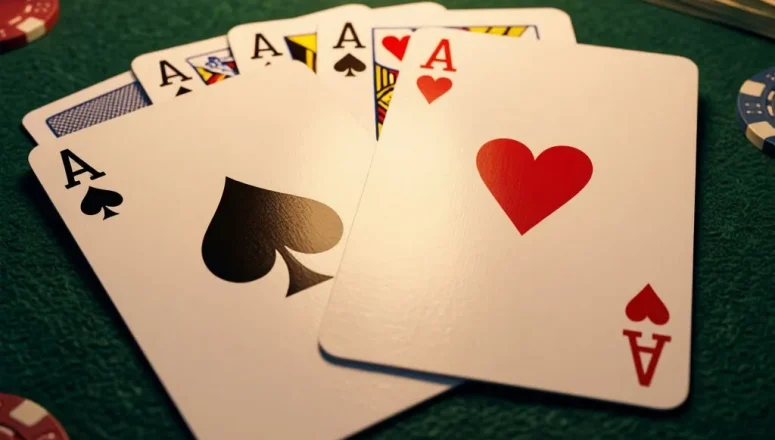
Sitting at a green felt blackjack table, whether in a bustling land-based casino or a live dealer stream, can feel incredibly empowering when you know exactly what to do with the cards in your hand. While basic actions like hitting and standing form the baseline of the game, the real opportunity to shift the odds in your favor lies in two advanced moves: doubling down and splitting pairs. Mastering the specific blackjack double down rules and knowing when to split your cards transforms the game from a gamble of pure luck into a highly calculated battle against the house.
The math behind doubling and splitting
To maximize your long-term returns, you must understand that blackjack is a game of shifting probabilities where the dealer’s visible card dictates your entire course of action. When you double down, you are allowed to double your initial wager in exchange for agreeing to take exactly one more card. Splitting, on the other hand, allows you to turn a matching pair into two separate hands, each with its own independent wager. Both moves require you to put more money on the table, which is why you must only execute them when the dealer is in a mathematically vulnerable position.
The ultimate decision matrix
Choosing when to increase your risk depends heavily on the strength of your hand relative to the dealer’s upcard. To simplify these decisions during live play, mathematicians have calculated the optimal moves for every possible combination using computer simulations.
The following matrix outlines the most profitable decisions for the most common player hands against the various upcards the dealer might be showing:
| Player starting hand | Dealer upcard 2 to 6 | Dealer upcard 7 to Ace | Optimal strategy decision |
|---|---|---|---|
| Hard 9 | Double down | Hit | Double if dealer has weak cards, otherwise hit |
| Hard 10 or 11 | Double down | Double down (except against Ace) | Double down to maximize high card probability |
| Pair of Aces or 8s | Split | Split | Always split to break up bad totals or chase soft 21 |
| Pair of 5s or 10s | Never split | Never split | Double the 5s, stand on the 10s |
| Soft 13 to 18 | Double down | Hit | Double down against low dealer cards to build pressure |
As demonstrated by this tactical breakdown, the dealer’s weak upcards (specifically two through six) represent the prime opportunity for players to double their investment. When the dealer shows a high-value card like a seven, ten, or ace, your strategy must pivot immediately to a defensive posture, focusing on securing a safe total rather than pushing for maximum payouts.
The exact scenarios for doubling down
Knowing the precise moments to double your wager is the fastest way to slash the house edge to its absolute minimum. When the math is on your side, doubling down is not a reckless gamble but a calculated move designed to exploit the dealer’s high probability of busting.
Several specific hand combinations represent the ideal conditions for applying the double down action during a standard round:
- Hard totals of eleven: this is the absolute best starting hand because any ten-value card instantly gives you a perfect twenty-one.
- Hard totals of ten: a highly favorable position where doubling is recommended unless the dealer is holding a ten-value card or an ace.
- Hard totals of nine: a strong candidate for doubling when the dealer shows a weak upcard like a three, four, five, or six.
- Soft totals of sixteen to eighteen: hands containing an ace that allow you to double safely against a weak dealer upcard because you cannot bust with a single extra card.
- Soft totals of thirteen to fifteen: situations where doubling is viable only if the dealer’s card is exceptionally weak, such as a five or six.
Executing these moves consistently ensures that you are placing more money on the felt only when your probability of winning is significantly higher than fifty percent. Over hundreds of hands, these elevated wagers offset the rounds where the dealer manages to pull a lucky run of cards to beat your total.
The golden rules of splitting pairs
Splitting pairs can be highly confusing for beginners because it involves playing two hands simultaneously, which can quickly drain your chips if done incorrectly. The primary goal of splitting is to turn a single disadvantageous hand into two profitable opportunities or to maximize your returns on exceptionally strong starting combinations.
To keep your splitting decisions simple and accurate during active play, you should commit several fundamental rules to memory:
- Always split aces: a pair of aces represents a terrible starting total of two or twelve, but splitting them gives you two independent chances to hit a soft twenty-one.
- Always split eights: a pair of eights totals sixteen, which is widely considered the worst possible hand in blackjack, but splitting them gives you two decent starting hands of eight.
- Never split tens: a pair of tens already equals a highly secure total of twenty, and risking this strong hand to chase two separate hands is mathematically foolish.
- Never split fives: a pair of fives totals ten, which is the perfect hand to double down on rather than splitting into two weak hands of five.
- Split low pairs against weak upcards: pairs of twos, threes, sixes, or sevens should only be split if the dealer shows a six or lower.
Following these guidelines prevents the common amateur mistake of splitting cards out of pure boredom or frustration. By sticking to these mathematically proven boundaries, you treat pair splitting as a calculated defensive tool rather than a random way to increase action.
Maintaining discipline at the table
While knowing the basic betting and splitting principles is essential, your ultimate success depends on emotional control and bankroll management. Even when the basic strategy chart says a move is statistically perfect, there is still a chance the dealer will pull the exact card they need to win the round. Treat every hand as an isolated mathematical event, never bet chips you cannot afford to lose, and let the long-term percentages guide you toward a more rewarding and structured blackjack experience.